

AI Onboarding: How To Activate Users In Under 60 Seconds
 Wes Bush
When starting to write this article, we asked ourselves what the best-in-class examples are of product-led companies that nailed Agent-Led Growth (ALG) onboarding. We found that software didn't evolve — it flipped. Today, users expect to express their intent and have the system handle the execution, eliminating the need to hunt through menus and clicks.
The problem is that most startups are just selling hype. They are slapping AI features onto old interfaces, and that fundamentally fails to translate to a true AI-native experience.
Signs that a SaaS product is nailing AI onboarding
- 60-seconds to value or less — this is the new bar for AI companies. You have just 60 seconds to get users to value or you lose them.
- Low input to great output — your users want a fantastic output with as little effort as possible.
- Shareworthy experience — the initial first strike in the product is so good you want to share it with others.
Conversion rates for AI-powered onboarding are way higher
Caveat: if done well.
PLG solved the access problem, but it left the outcomes unsolved. That gap — the friction of self-serve execution — is where Agent-Led Growth comes in.
Teams using agentic onboarding are seeing 25–30% self-serve conversion, a massive leap from the 3–5% baseline for traditional PLG products. This isn't theoretical; it's what we are gathering from our partners, customers, and audience.
Going from educating the user → educating the agent
Old SaaS world: the onboarding experience has tooltips, tutorial videos, hotspots — all aimed at educating the user about your interface and features.
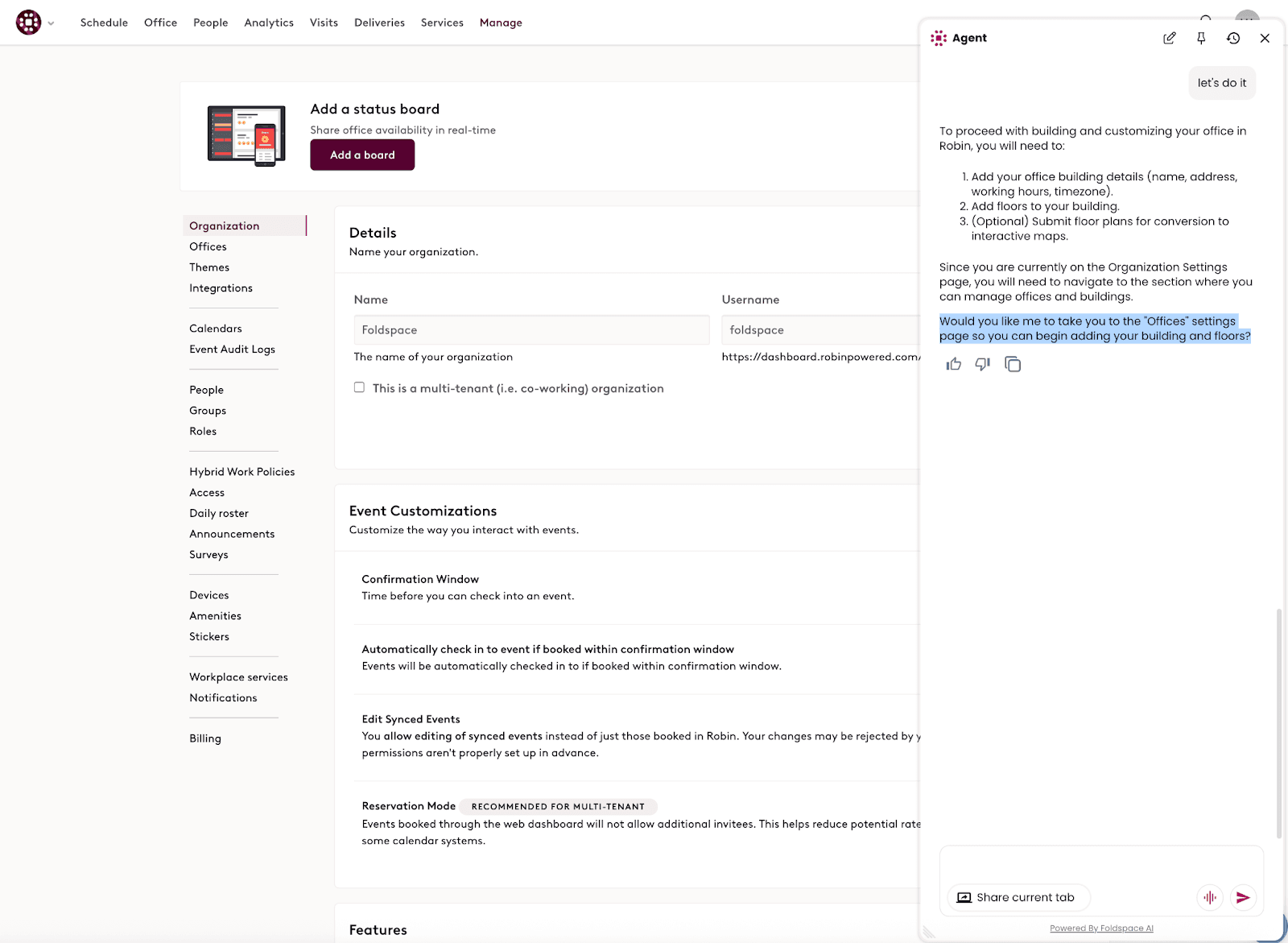
New SaaS world: an AI agent guides you through onboarding, or does steps for you, based on your desired outcome. You answer onboarding questions to help the AI understand what you want.
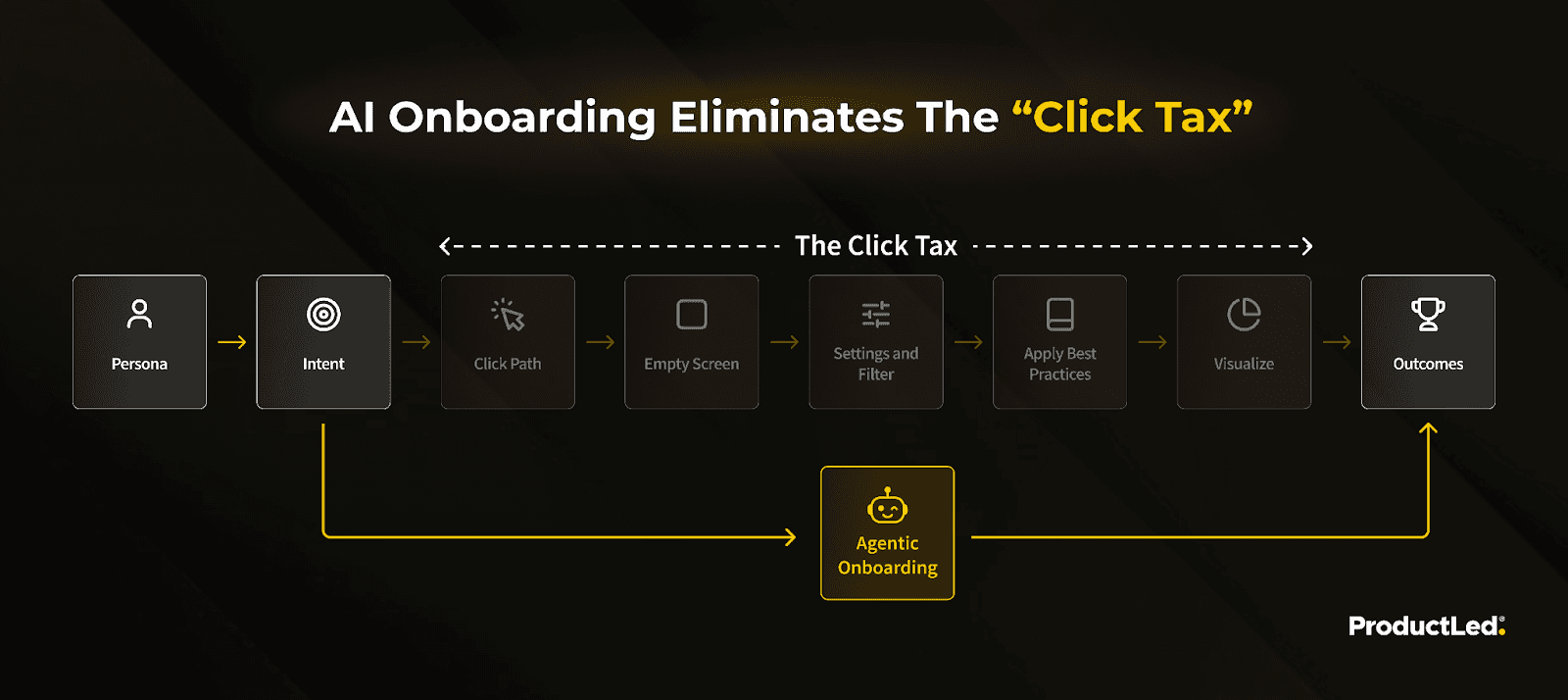
Eliminating the "click tax"
This transition eliminates what Mickey Alon from Foldspace calls the click tax — all in-app actions that do not directly move the user toward their desired outcome, but instead force them to learn the product, navigate menus, or follow prescribed steps. Today, AI can do that for you.
A useful mental model
AI in onboarding evolves across 4 levels:
Realistic today
- Inform – explain features.
- Guide – recommend next steps.
- Execute – help do the work.
Close to reality
- Orchestrate – adapt the system itself.
Most products stop at level 2. The real leverage is 3 and 4.
7 real ways AI can improve your onboarding flow
1. AI-driven onboarding personalization (context before content)
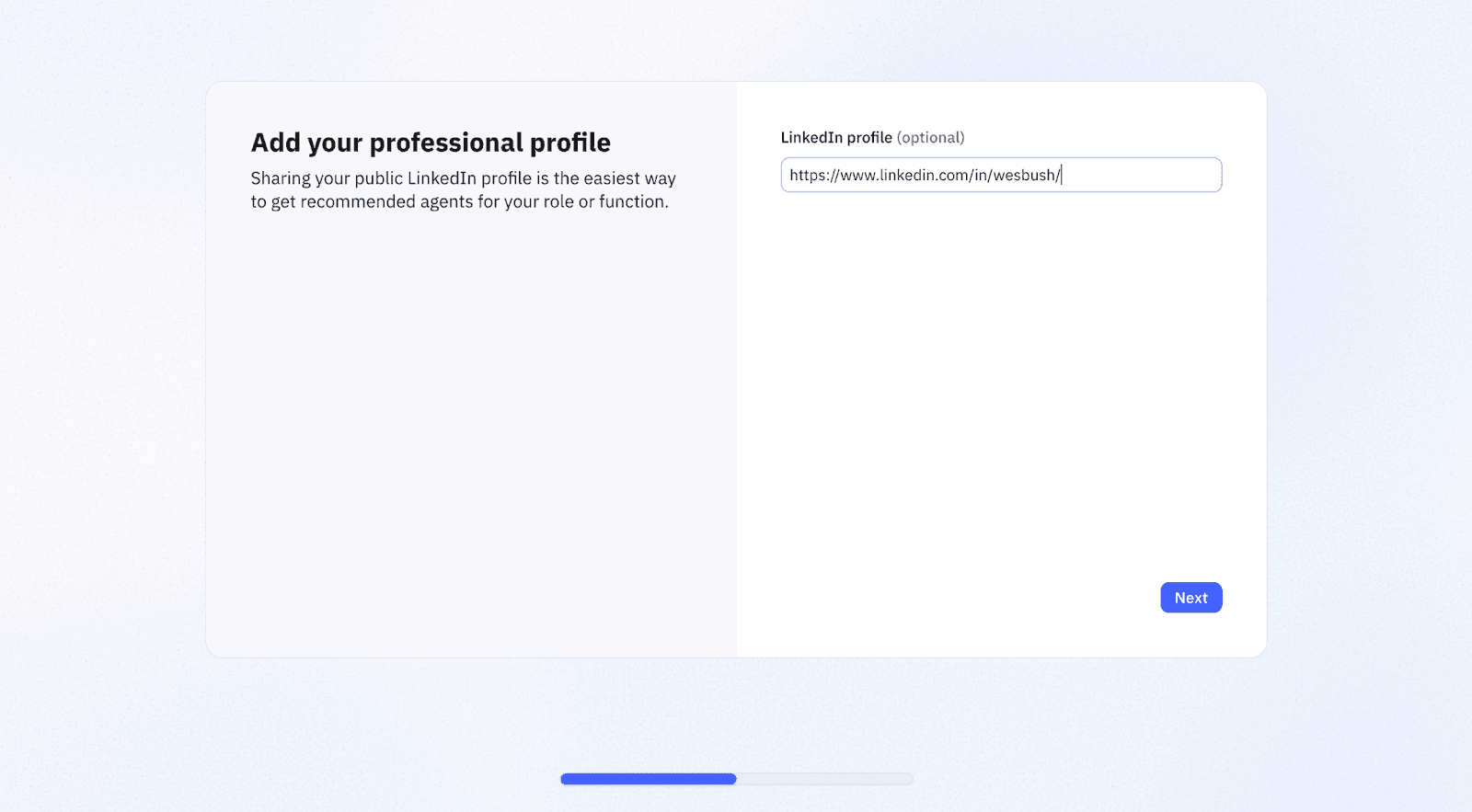
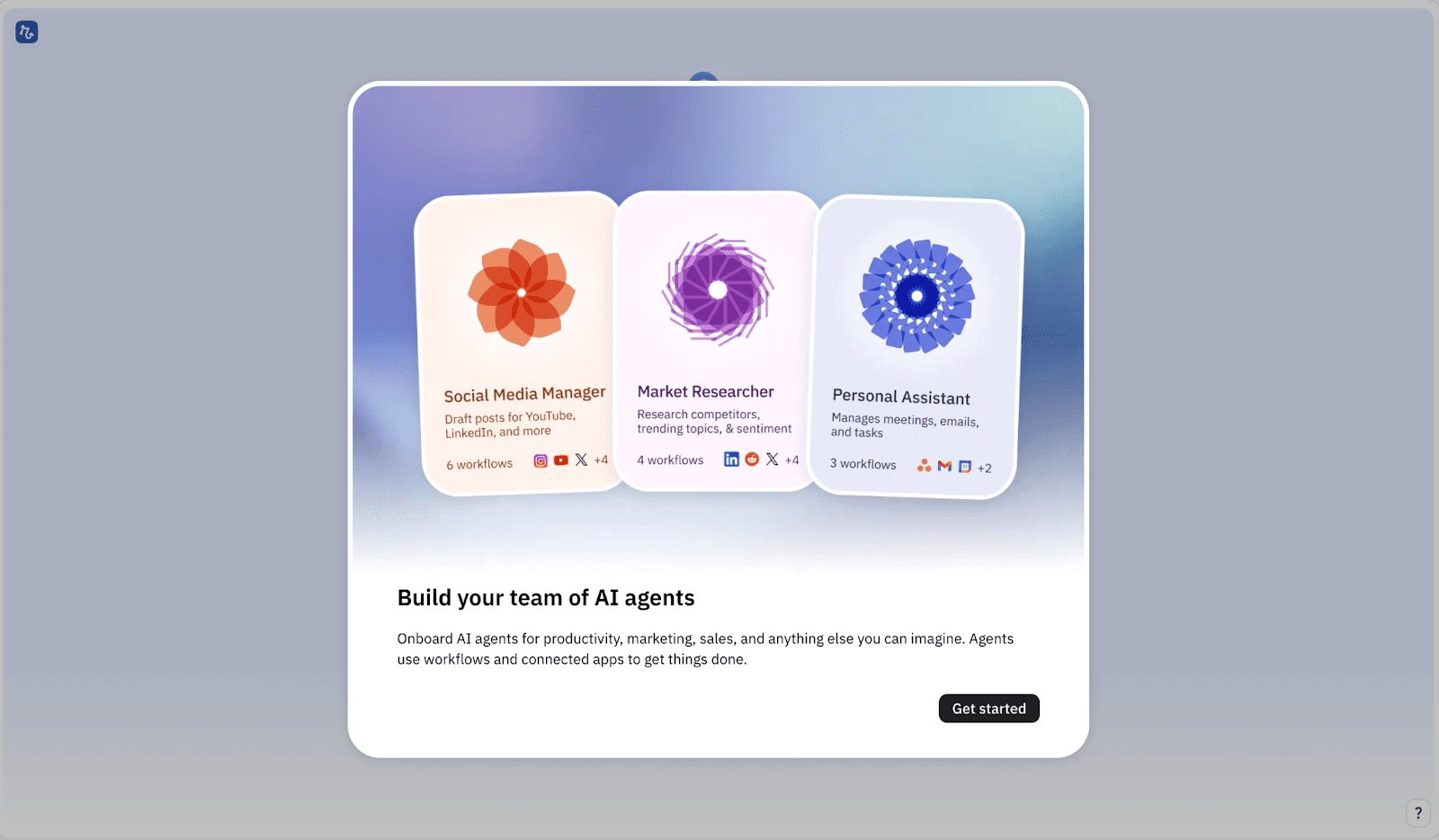
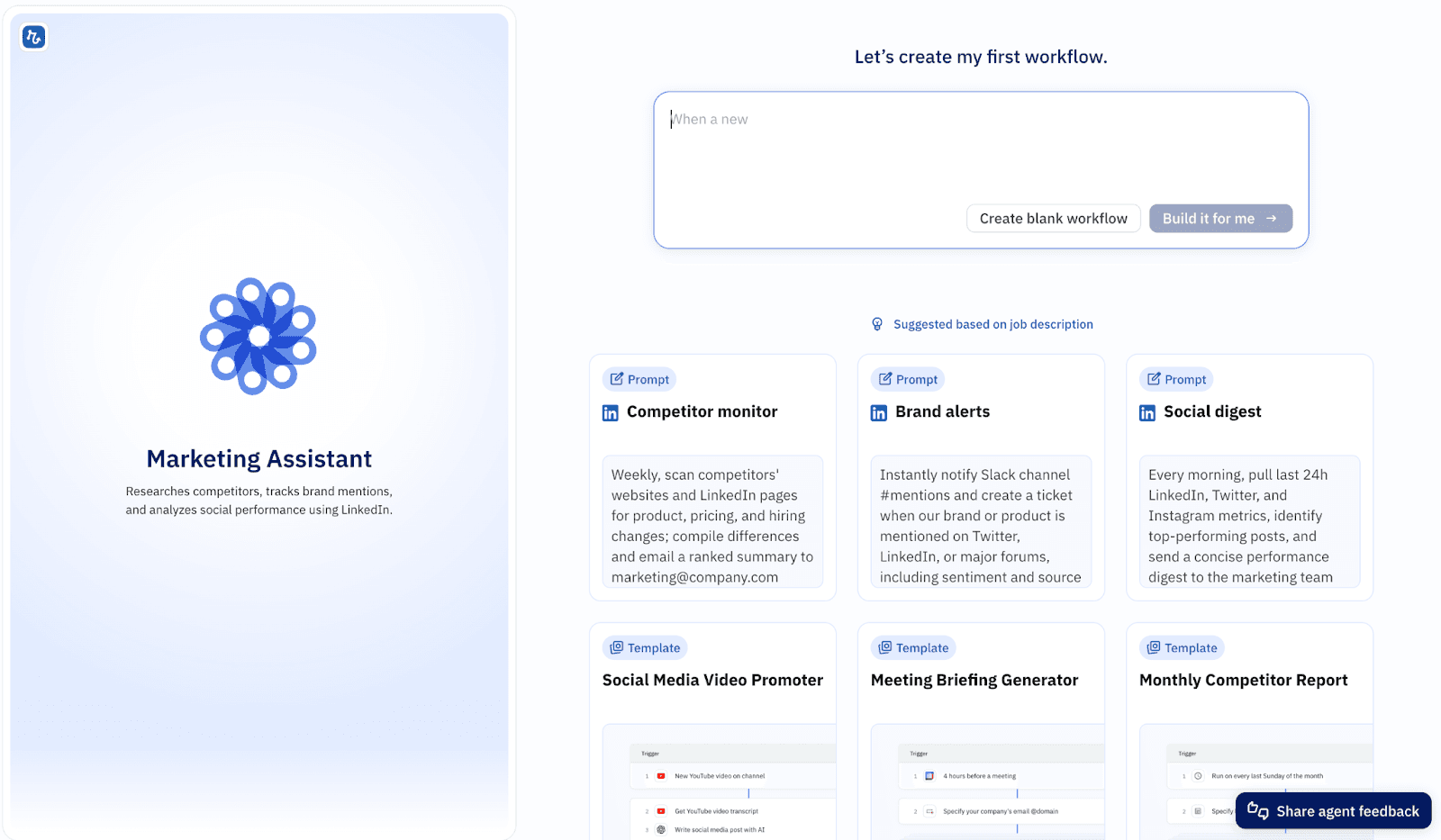
Stop giving everyone the same "tour." Use AI to decide which onboarding flow someone should enter — predicting intent from user data, pre-sign-up tracking, chatbot interactions, and initial onboarding questions. Example: Relay.app ingests your LinkedIn profile to contextually personalize each user's onboarding, changing featured images and workflow suggestions to match your context.
2. Conversational AI as the primary onboarding interface
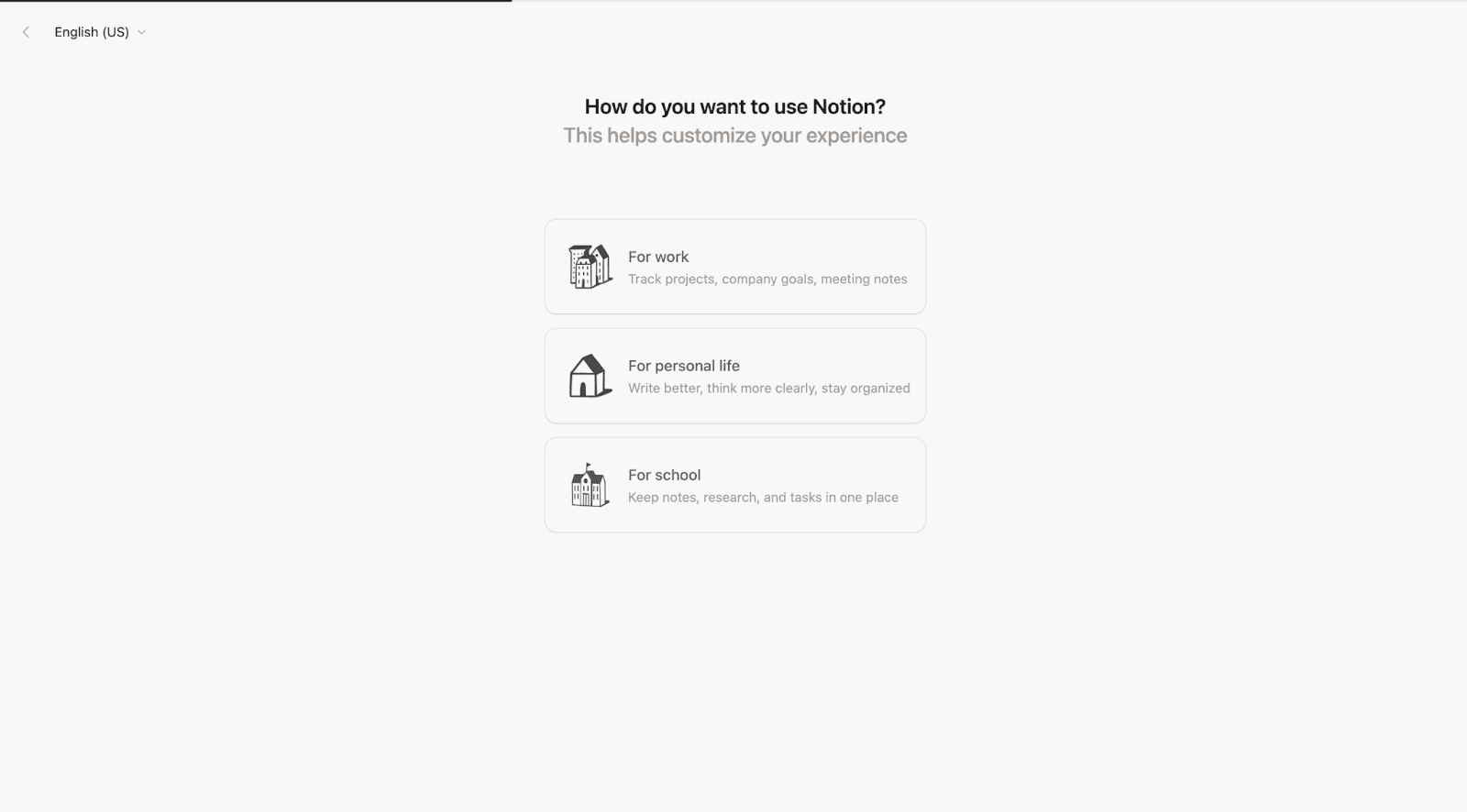
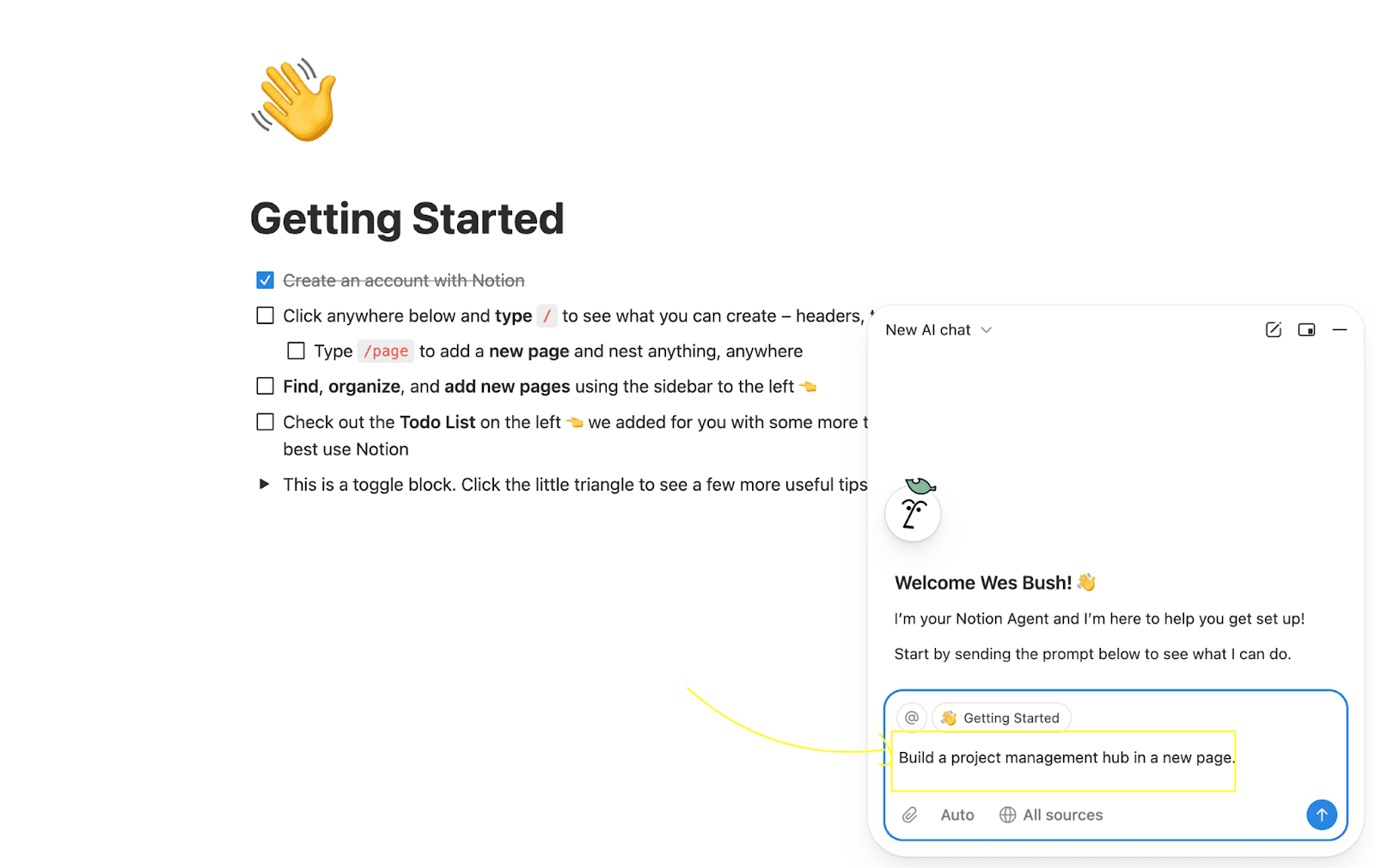
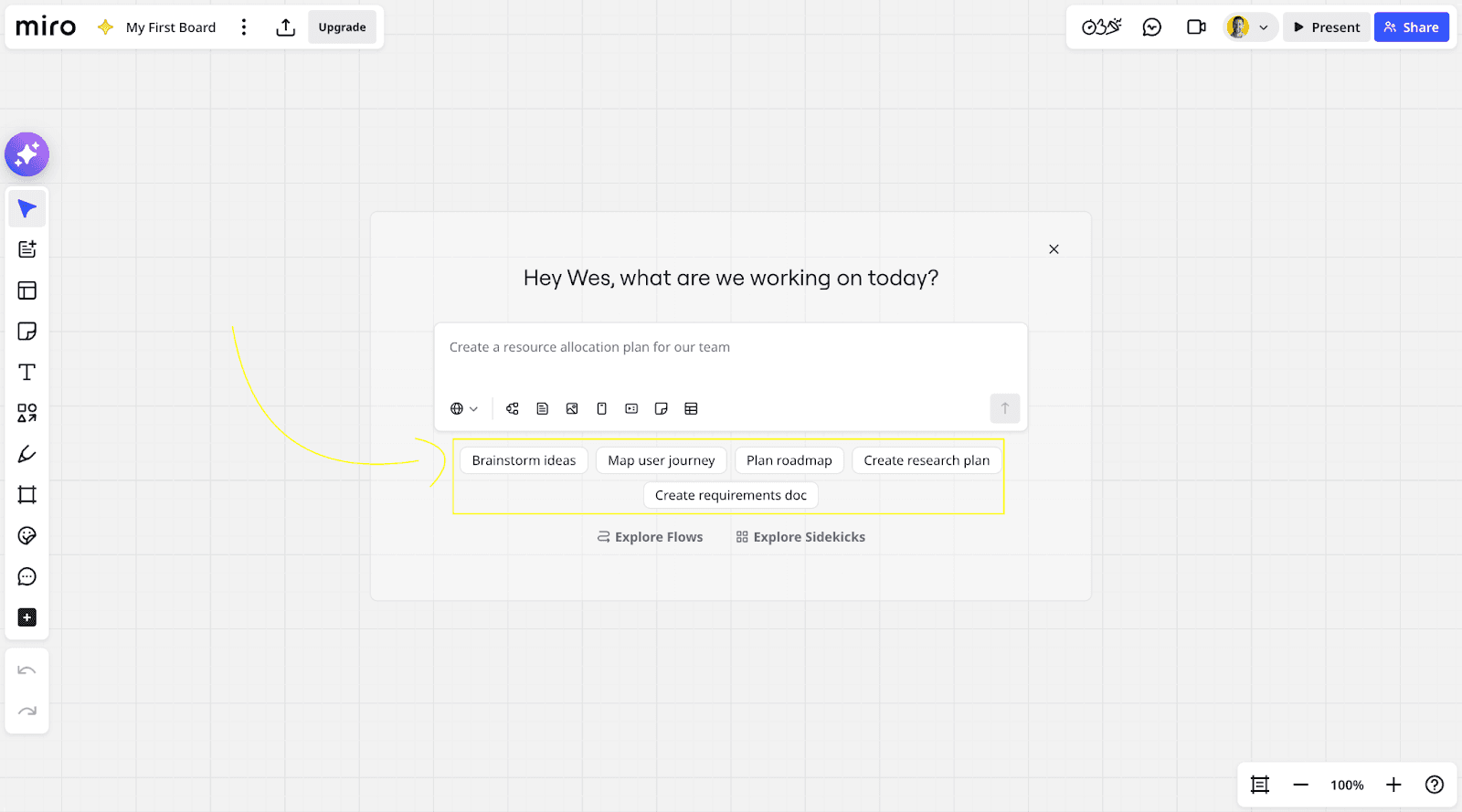
Replace static walkthroughs with a conversation. Let users describe exactly what they want, and either do it for them or guide them through it. Examples: Notion shortened its onboarding flow and added an AI chatbot sidebar; Miro made a conversational AI the entire first screen of the workspace.
3. AI-guided task completion (from guidance to execution)
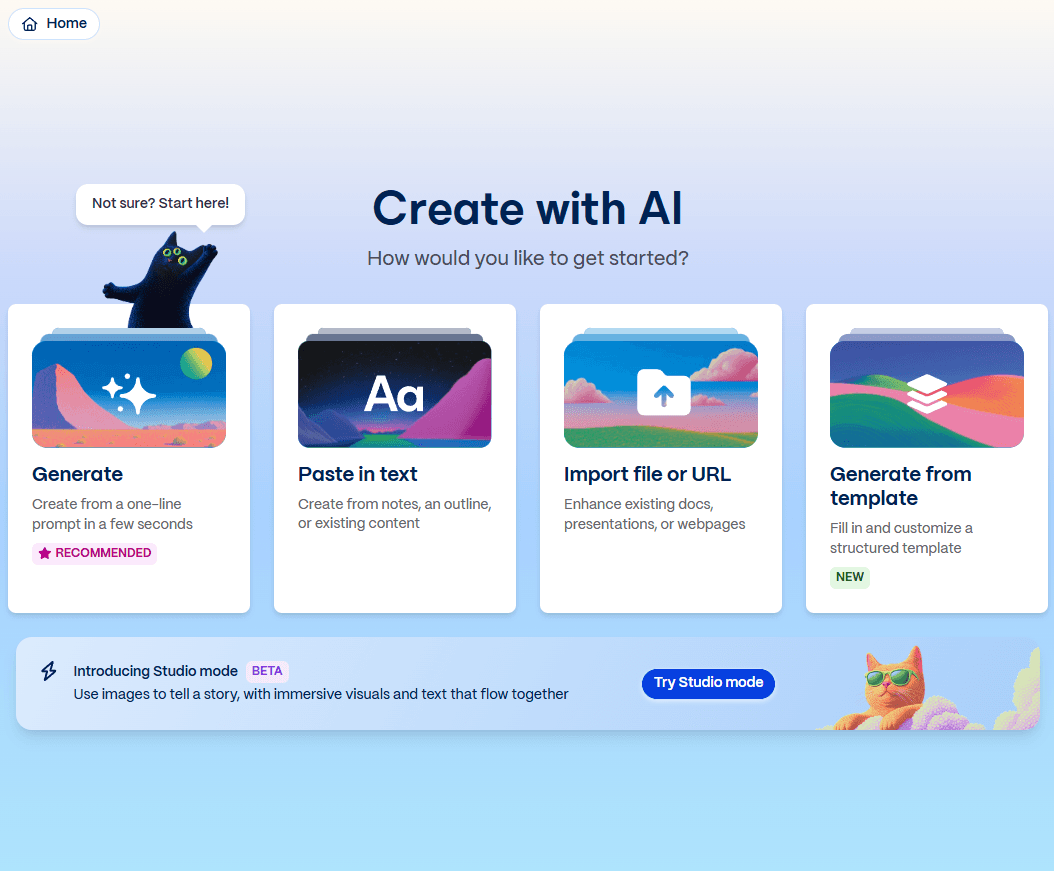
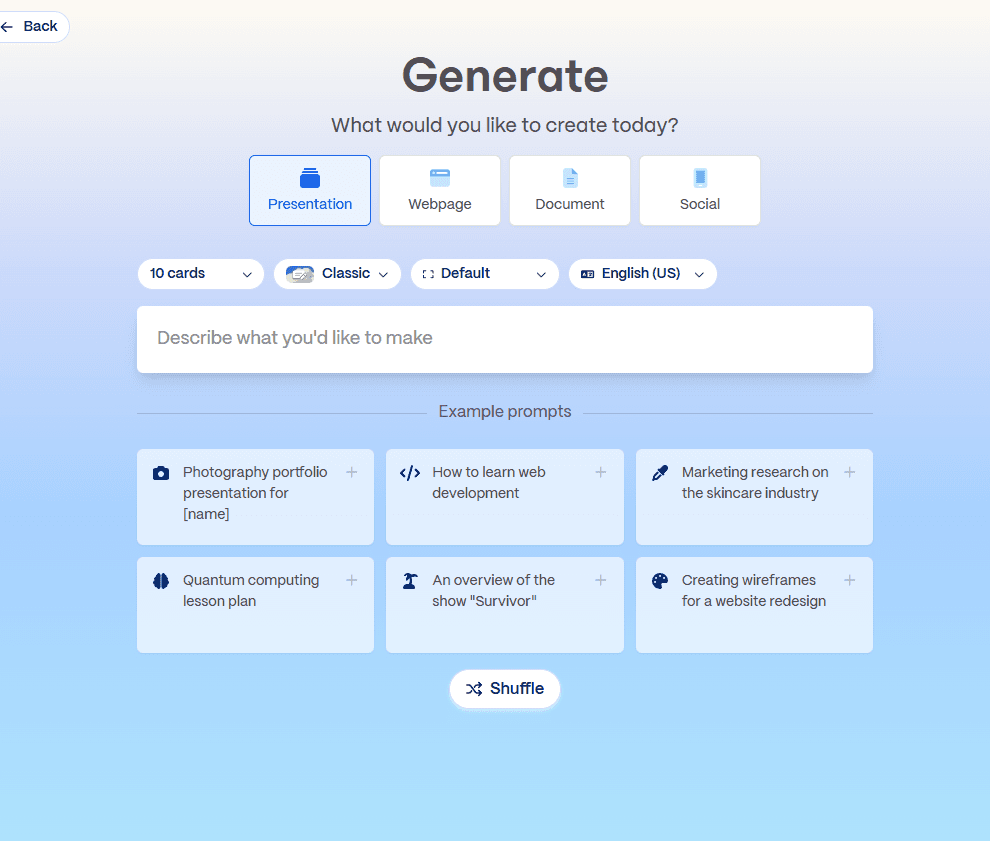
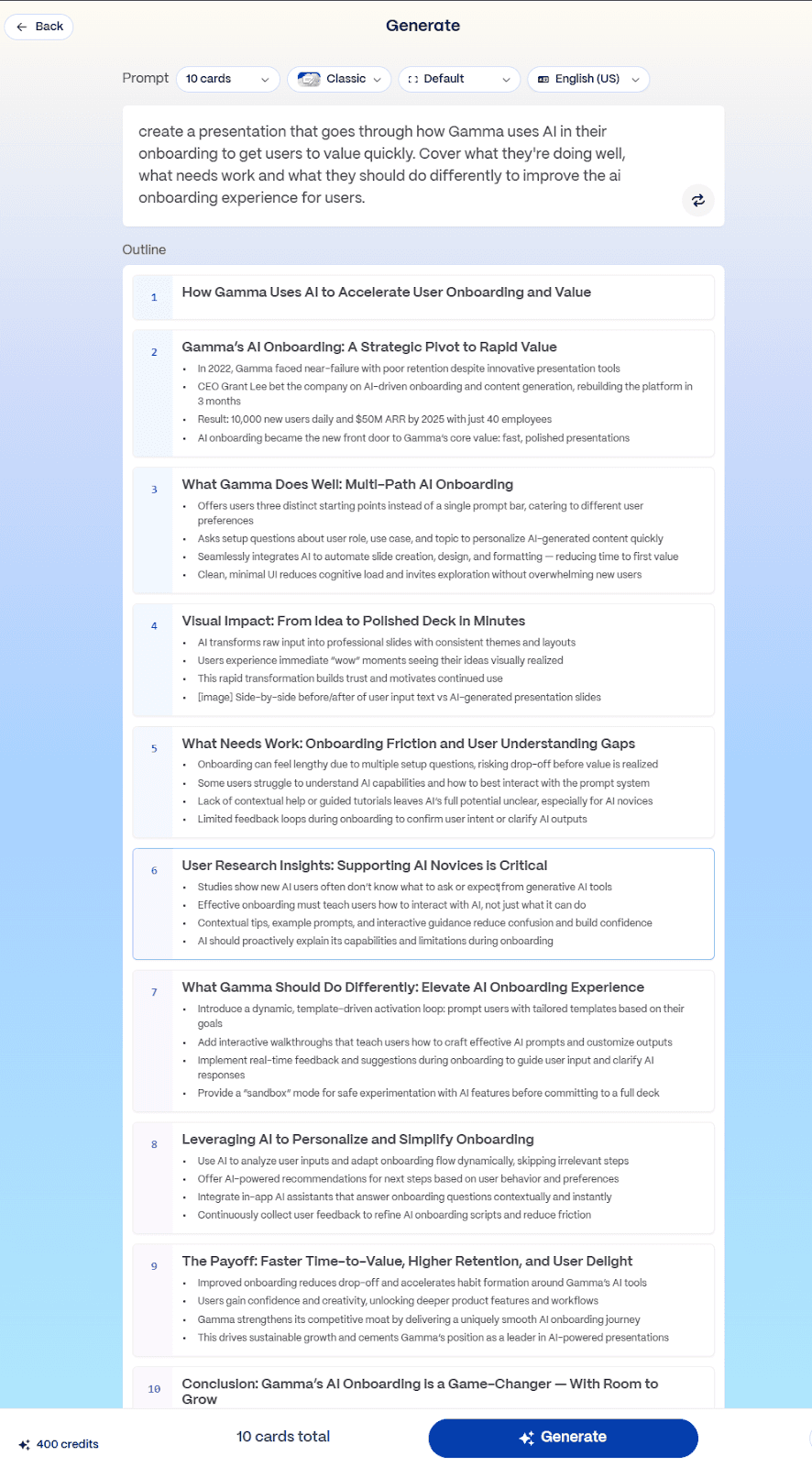
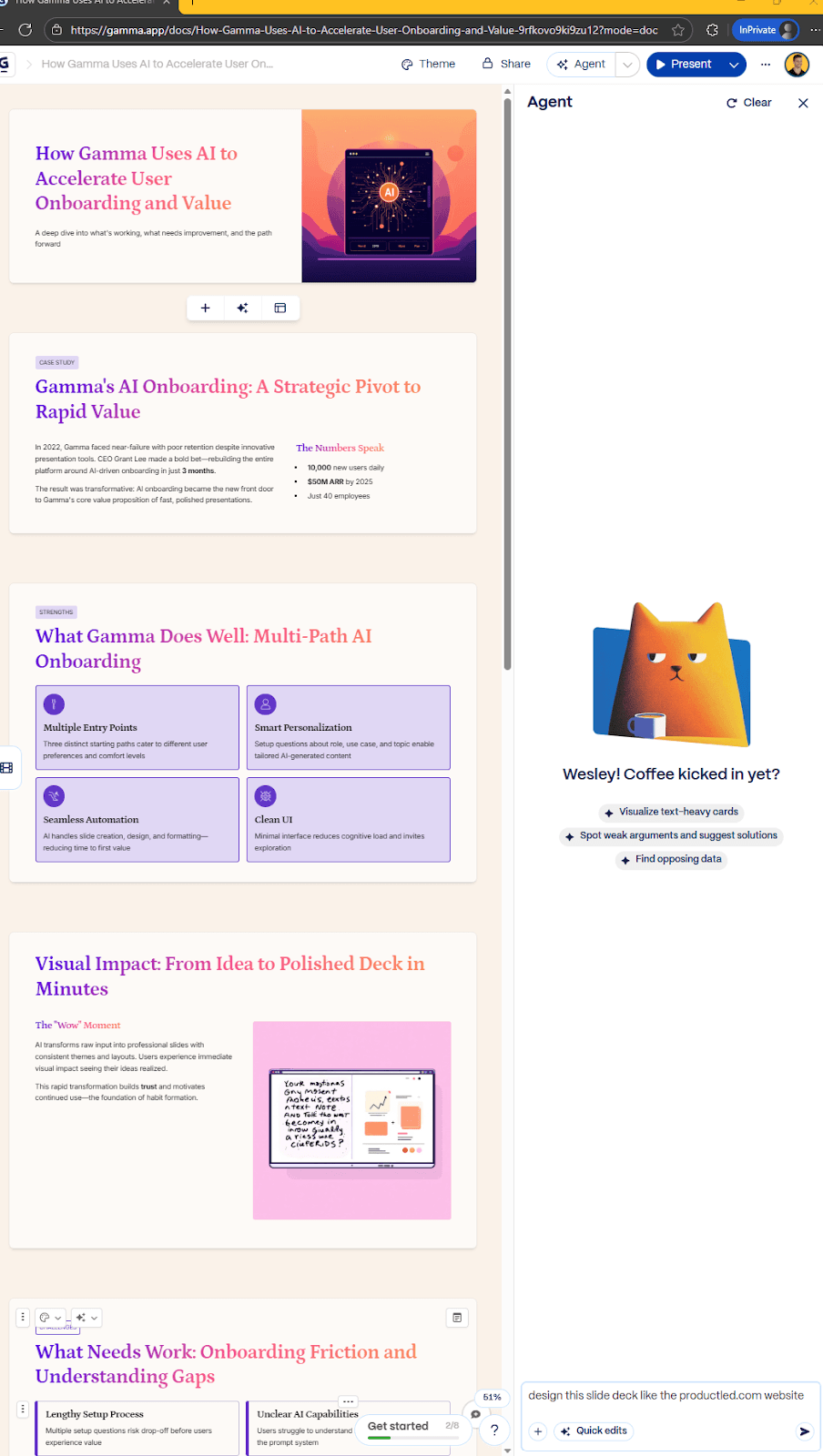
AI does the onboarding work for users instead of guiding them through it — auto-filling setup steps, generating first artifacts, converting natural language into product actions. Example: Gamma generates a full 10-card presentation within seconds of onboarding, then lets you prompt an agent to update the deck or any slide.
4. Adaptive onboarding based on behavior (just-in-time education)
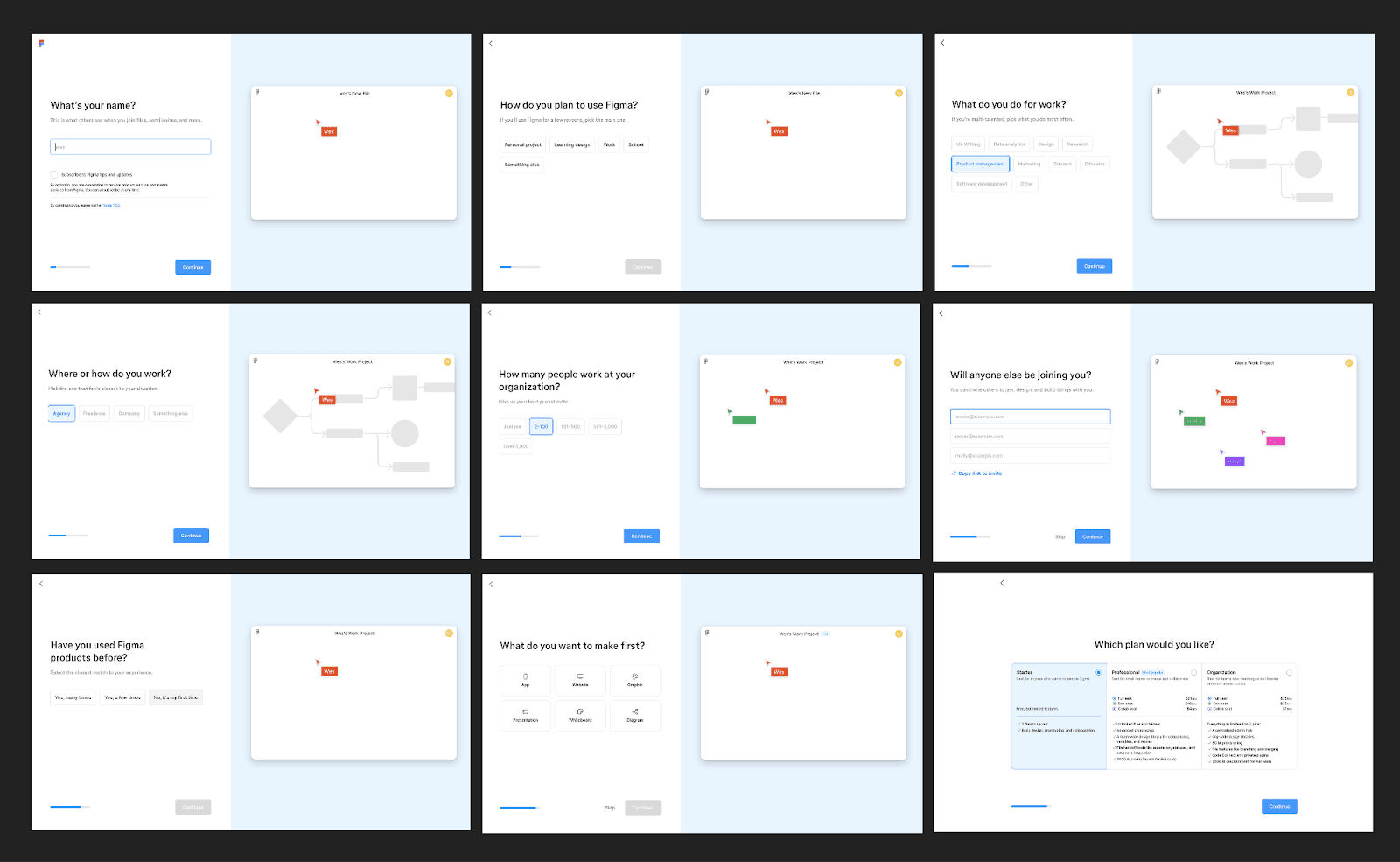
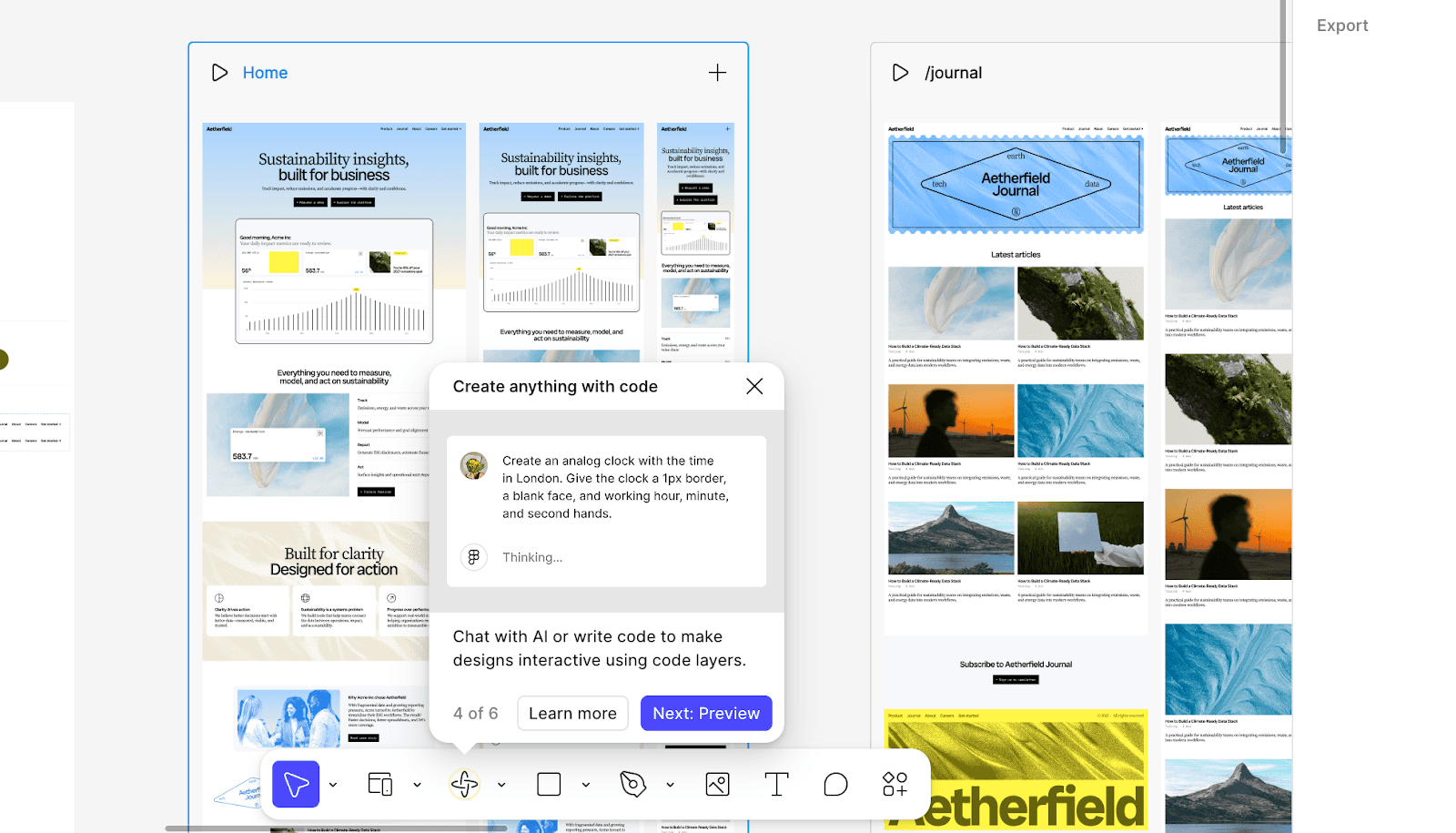
Onboarding should change based on what users actually do. Analyze behavior to detect friction, identify stalled users before they churn, and dynamically surface tips or alternative paths. Example: Figma suggests features, plugins, and tutorials based on what you're doing in the canvas.
5. AI for team & multi-user onboarding
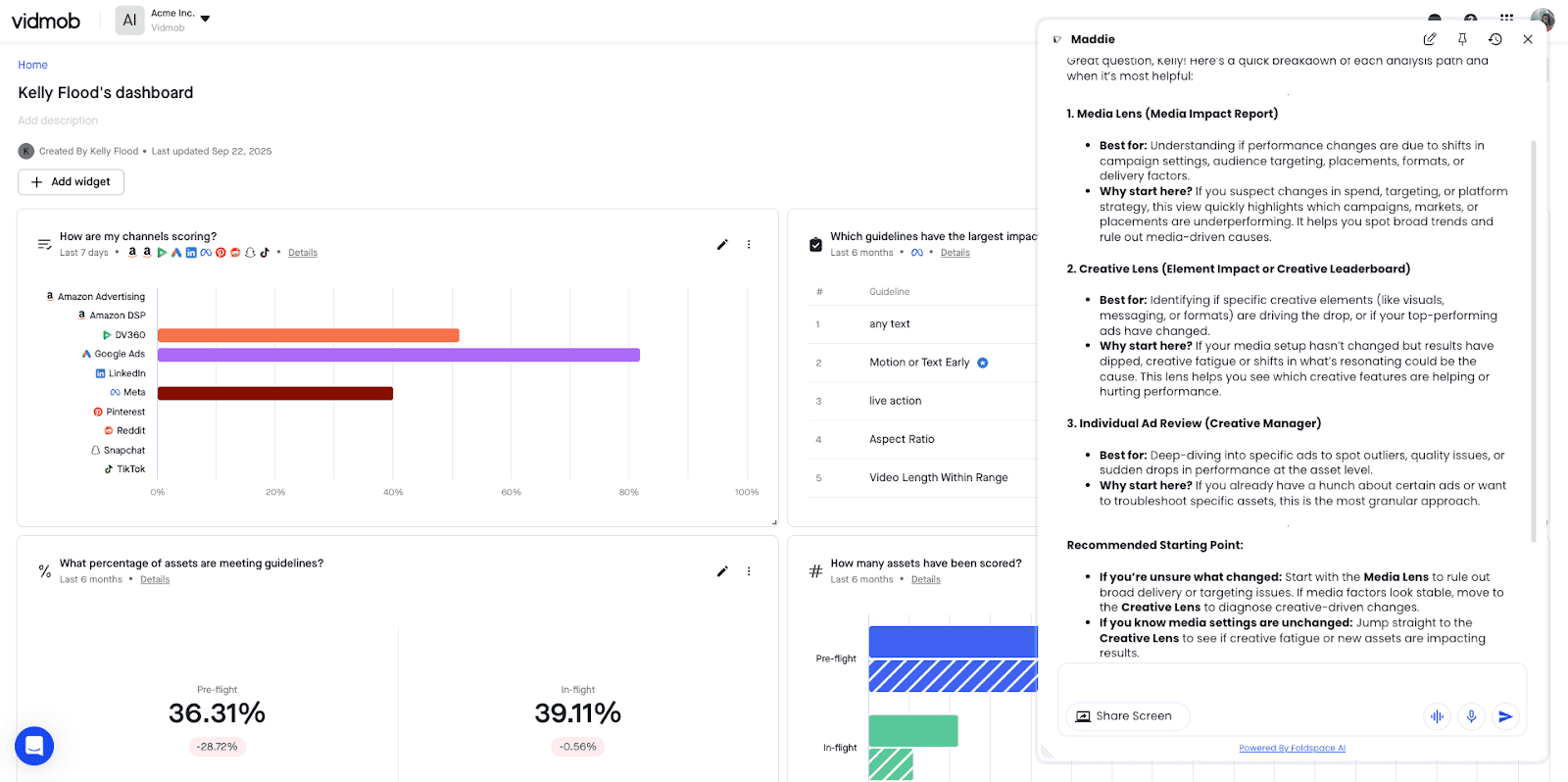
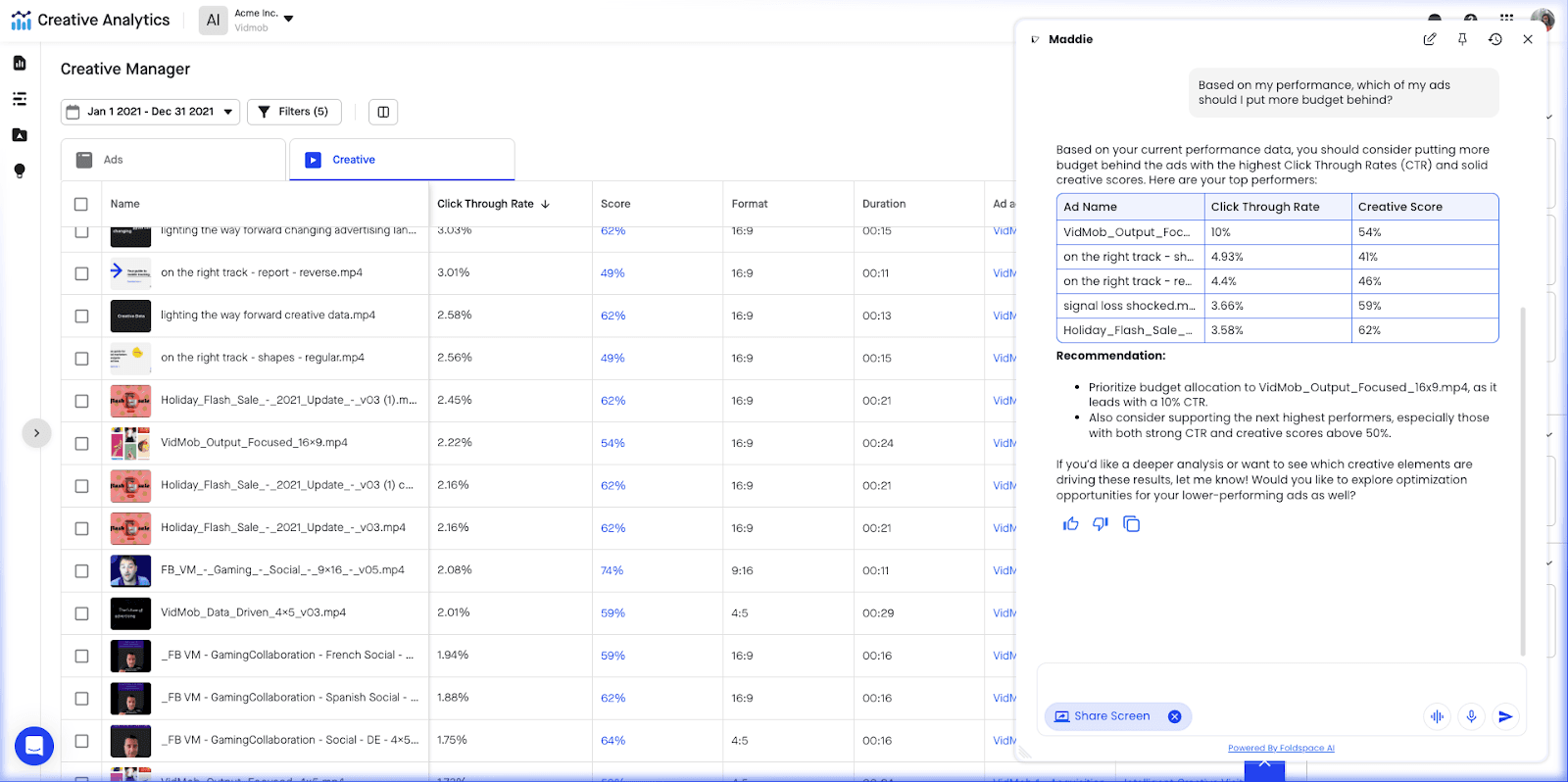
In many B2B products, real onboarding ends when a group of users reaches value. AI can detect account maturity vs individual maturity and recommend next steps to activate past the champion user. Example: Vidmob's agent (enabled by Foldspace.ai) gives tailored recommendations and performs actions based on user roles and desired outcomes.
6. AI-enabled feedback loops during onboarding
AI listens while users onboard and adjusts responses to nudge them toward paths that increase activation — then feeds insight back to the product team to improve the UX. Results from these "agentic redirects" become UI improvement signals.
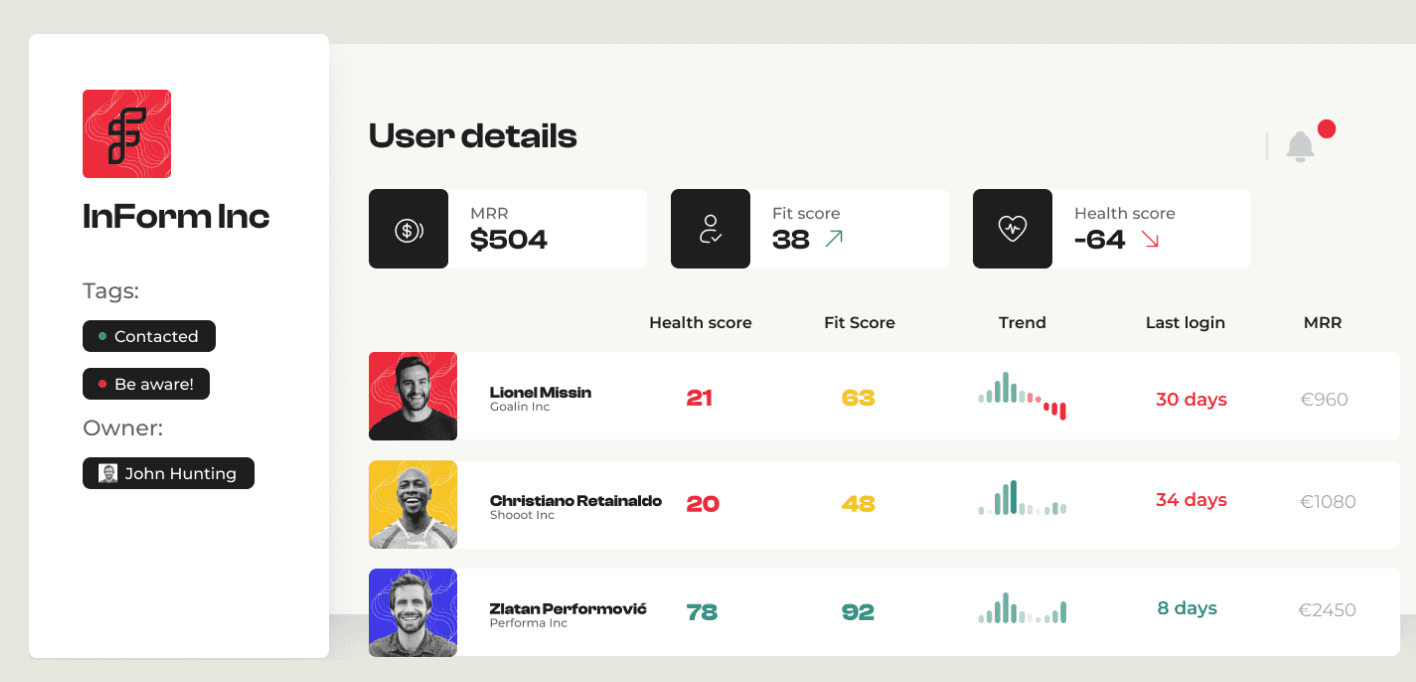
7. AI-enhanced churn prevention (early churn defense)
Onboarding is also about what doesn't happen. Predict churn risk during the first sessions, trigger intervention flows automatically, and suggest human outreach only when it matters.
Fantasy use cases that are "technically doable"
We haven't found real examples of these yet, but they're technically doable and will increasingly show up in PLG motions:
- AI-generated just-in-time education (microlearning) — teach only what's needed, exactly when it's needed, using the user's own data.
- AI as the onboarding orchestrator (meta layer) — AI coordinates all onboarding systems (in-app, email, Slack, human touchpoints) instead of adding another one.
The math is simple. Faster time-to-value = better activation. Better activation usually means less churn and more paid users. That's where AI comes in — used correctly, it can shrink time-to-value to seconds instead of minutes.